On 31 August 1957, Malaya gained independence from British colonial rule, marking the birth of a new nation. The historic event was celebrated at Merdeka Stadium in Kuala Lumpur, where the Union Jack was lowered and the Malayan flag was raised for the first time. Led by Tunku Abdul Rahman, the country’s first Prime Minister, the moment symbolised the beginning of self-governance, unity among diverse communities, and the hope for a prosperous future. It was a proud and defining milestone in Malaysia’s journey towards nationhood.
Morning school runs are usually routine, get the kids in the car, survive the traffic, sip Coffee from my trusty tumbler, and maybe sneak in a bit of podcast time.
But that day, I made the mistake of talking to Siri.
While driving, I said, “Hey Siri, call my wife.”
Siri, with the confidence of someone who has never been married, replied:
Before I could defend myself, my 14-year-old son Adam, sitting at the back, sensing danger like a cat hearing a can opener and said loudly:
“Wow Abie!!! You have three wives?! Careful Abie… nanti kena tidur luar.”
At that point, my daughters were already laughing, and I was calculating the odds of Siri making it through the rest of the trip.
Just imagine if this happened in public and the WIFE was sitting right next to you. That’s not just “funny anecdote” territory! That’s a public trial without a jury.
Now your wife freezes mid-sip, the barista stops steaming the milk, and the uncle at the next table lowers his newspaper just to get a better look at the guy who apparently has three wives.
In that split second, you have to choose:
Laugh it off (risky).
Blame Siri (safe but suspicious).
Or fake a call and pretend Siri was asking which contact group to use (expert-level damage control).
Lesson learned: Siri may be smart, but she is not designed for marital harmony.
Also… do not test voice commands when your kids are in the car, they are too quick to turn small things into big dramas.
Salam Hari Khamis Warga Dunia, Salam dari Munmon, serorang Gamer dan bukannya doktor, tapi tahu beza air paip dengan air laut.
Baru-baru ni, kecoh satu Malaysia. Ada influencer tampil berkongsi pendapat, katanya, air RO ni tak bagus. Katanya lagi, “air mineral lagi elok, sebab ada kandungan semula jadi, bukan air kosong yang dah dibuang segalanya.“
Hmm.
Maka bermulalah debat meja makan: “Eh, kau pakai Coway ke Cuckoo?” “Eh, tu air RO, tak elok minum selalu!” “Eh, betul ke air RO hisap mineral dalam badan?”
Bila “Sharing” Melebihi Fakta
Kita hidup dalam zaman di mana influencer boleh jadi pakar pemakanan semalaman, hanya kerana ada cincin oksimeter dan filter kamera yang power. Tapi malangnya, filter tak boleh tapis maklumat mengelirukan.
Air RO (Reverse Osmosis) adalah teknologi penapisan yang sangat berkesan. Ia tapis bahan kimia, logam berat, dan juga mineral semula jadi. Jadi memang benar, memang tinggal air “kosong” yang sangat bersih.
Adakah ini satu masalah kepada kita pengguna Air RO ini? Tidak. Wajib ke semua orang minum RO? Itu pun juga tidak.
Siapa Perlukan Air RO?
Soalnya sekarang, siapa yang patut ada Water Filter, tak kisah jenama K-Pop ke, jenama Jarman ka, jenama apa² pon. Berikut adalah antara sebab kenapa mesin air itu dipasang di dalam rumah.
Kalau rumah anda dekat kawasan air berbau, atau penuh klorin, atau tinggal di kawasan air keras (hard water, macam dekat Perlis) RO sangat membantu. Influencer² ni kena banyak membaca. Hard Water pon belum tentu dia tahu bendalah apa tu. Korang ada tgk orang Perlis minum air direct dari paip? Sebab air dekat sana sangat tinggi kandungan mineral dia sampai. Keras kejung nanti badan penuh dengan magensium dan kalsium.
Orang yang ada masalah pinggang, renal disease mmg kena minum RO atau drinking water. Sebab depa ni ada masalah diet, tak boleh ada banyak mineral kerana tidak ada kemampuan menapis. Jadinya RO sangatlah sesuai untuk golongan ini.
Atau memang you guys suka air yang puteh dan bersih, maknya RO water la. Sedapnya wooo minum sejuk².
Jadinya, disebabkan RO water tu takde mineral gantilah dari sumber lain macam sayur ke, buah ke (bukan durian ye saudara). Kena pulak ko mmg bangsa makan ramen segera, mee segera atau apa yang segara secara istiqomah, RO water memang tak baik untuk anda. So minum lah RO, tapi make sure hampa dapatkan mineral dari sumber yang lain, bukan dari air mineral sahaja… sebab….
Air Mineral vs Air RO?
Yes, air mineral ada kalsium, magnesium dan mineral lain, namun kandungan mineralnya adalah di dalam jumlah yang sangat kecil. Untuk dapat mineral secukupnya daripada air mineral, anda mungkin kena minum satu kolam sehari.
Makanya kenyataan “lebih baik air mineral daripada air RO” hmm… mungkin sesuai untuk kapsyen Instagram, video TikTok atau Status Facebook, tapi tak berapa sesuai untuk fakta kesihatan. Sebabnya tak benar pon.
Sebagai Rumusannya
Kita boleh pilih minum air mineral, air RO, air masak, air kelapa atau air MILO… semua ok. Tapi janganlah panik hanya kerana satu video viral. Kalau betul risau sangat, boleh rujuk pakar kesihatan dan bukannya pakar konten.
Lagi satu sedara, Kalau nak jadi sihat, jangan harap pada jenis air saja. Tak cukup. Makan seimbang. Dan tolonglah, jangan percaya semua benda yang keluar dari mulut orang famous. Famous ya, tak cerdik pun ya. So korang pikir²lah sendiri.
People assume librarians are masters of the order of the Dewey Decimal, the wielding guardians of silent halls and sorted shelves. And sure, part of that is true. Some might even say, untungla jadi Librarian, boleh baca buku bagai… eh ko ni, kita tak ada masa la nak baca buku semua (sebab tu kita subscribe getAbsract, summarise je semua ni).
What people tak perasan is that the chaos we manage behind the scenes: missing books, metadata meltdowns, and users who still type “the whole questions” into search bars.
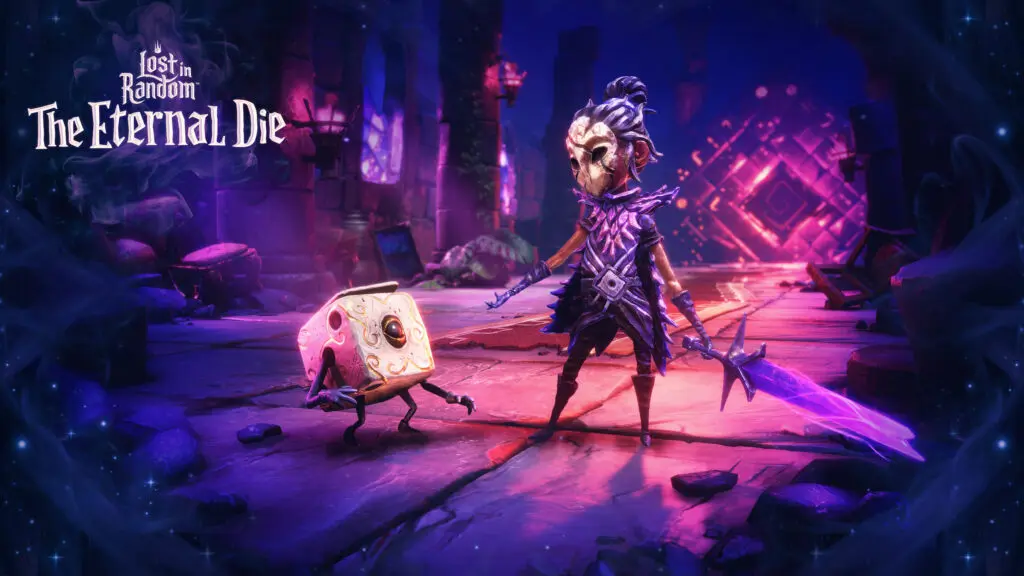
In that sense, I have never felt more seen than when I played Lost in Random: Eternal Die. It is not about randomness deciding your fate. It is about how you respond to the strange and often unfair tools life hands you.
Aleksandra is not a passive character waiting for a number to appear. She is a girl who was once a queen, now fighting her way through a broken world shaped by her own past decisions. The die in her hand is not about chance. It reflects what she has learned, what she carries, and how far she is willing to go.
That hit me. Sometimes it feels like we are trapped in our version of the Black Die. Life throws things at us that do not make sense. Loss. Mistakes. Silence. But we keep moving forward. We use whatever little voice or power we have. Like Aleksandra, we are not rolling the dice to see who we become. We are choosing what that roll means. We are equipping our pain, our joy, and our memory like weapons. Not because we want to win, but because we need to survive and make peace with the ruins.
Enter a dark new chapter set in the twisted world of Random. Play as Queen Aleksandra and roll alongside your living die, Fortune, as you face the corrupted designs of Mare the Knight in this roguelite fairytale adventure.
That is why this game stayed with me. It reminded me that control is not about avoiding chaos. It is about facing it with the right tools and a bit of courage.
Chaos Is a System: You Just Haven’t Indexed It Yet
In the game, the protagonist Even journeys through unpredictable lands with a sentient die named Fortune. Nothing goes as planned, but she adapts, survives, and finds clarity in confusion.
That is not unlike library work. You start the day thinking you will catalogue a few journal titles, but suddenly someone’s locked out of their account, a database isn’t syncing, and an exec wants a 5-year industry forecast by lunch.
The beauty is learning to roll with it, literally. Every unpredictable task becomes a chance to regroup, reprioritise, and figure things out on the fly.
Parenting Is Like Random Dice Rolls (and Sometimes You Roll a 1)
I have three kids, and no user manual came with them. One moment, they are peaceful angels reading under a blanket. The next moment, someone’s crying over unplayable Roblox (aku blocked la apa lagi). Tak pon gadoh pasal youtube Channel, sorang nak tengok MiawAug, sorang lagi nak tgk Minecraft Channel – entah apa la depa ni semua???
Much like the game, parenting is all about responding to the unexpected. No guaranteed formula that will work all the time. You make the best choice with the hand (or die roll) you’re given.
Sometimes, it’s not about getting everything right. It’s about being there, ready to adapt, listen, and love even in uncertainty.
Librarianship in the Dice Kingdom
We may work in air-conditioned rooms and databases, but let’s be honest — a modern library is no longer about just storing books.
We:
Fight for reading culture in an age of 10-second reels.
Train AI models on curated knowledge.
Run outreach events while updating MARC records.
Explain for the hundredth time that “Google is not a library.”
In Lost in Random, Even finds her power in embracing the randomness. That’s the librarian spirit, too. Order isn’t about controlling everything. It’s about navigating the mess with curiosity, compassion, and maybe a few backup drives.
What the Game (and Life) Really Says
Random is not the opposite of order. It is part of it.
Whether it is raising children, managing knowledge, or exploring strange fantasy worlds, we are all just trying to move through chaos with a bit of grace. Some days you roll a six. Some days, you step on a LEGO. Both are part of the journey.
So here is to the unexpected. To the librarians. To the parents. To the gamers. And yes, to Milo, to chaos, and to the quiet joy of a shelf that finally makes sense.
Few days ago, as I attended one of the prestigious conference for information professionals or in other words, Librarians, the CONSAL XIX (2025). This event was made even prestigious with the arrival of Malaysia’s 10th Prime Minister to give his words…. katanya “morning lecture” – boleh refer sini untuk Text Ucapaan YAB Perdana Menteri Dato’ Seri Anwar Ibrahim, Perdana Menteri Malaysia ke-10, sempena ucaptamanya pada majlis tersebut.
Ok. Let us return to the main text of this post.
As a librarian, a gamer (currently lost between Diablo 4 dungeons, the wait for Borderlands 4, and the weird beauty of Lost in Random), and a father navigating homework, and monthly Grab fees, I felt this one deep. And let me tell you, he did not come in with a generic speech. He came in like an endgame Boss (Level: 💀💀💀) dropping wisdom bombs.
Here is my take.
Libraries Are Not Side Quests
PMX said it straight, libraries are not decorative add-ons. They are the main storyline in any nation that wants to stand tall and think big. He spoke of Alexandria and Baitul Hikmah like they were real-life equivalents of knowledge guild halls. Places where people did not just collect scrolls — they built worlds.
Librarians Are Not Just Bookkeepers
According to PMX, we should not just be stamping books and sorting Dewey decimals. Librarians should be creators of curiosity. The Architects of thought as he shared a story of a librarian who faxed him book reviews late at night. Gitulah, kami mmg suka buat orang suka dan gembira. Melampau ke? Pada orang lain, mungkin namun itulah dia kind of passion that keeps the light on when the world is too tired to read.
Books Are Magic Spells That Still Work
Quoting Carl Sagan, PMX reminded us that books allow you to enter the mind of someone who has been gone for thousands of years.
“A book is proof that humans are capable of working magic. A book is a flat object made from a tree, with flexible parts on which are imprinted lots of funny dark squiggles. But one glance at it and you’re inside the mind of another person, maybe somebody dead for thousands of years. Across the millennia, an author is speaking, clearly and silently, inside your head, directly to you. Writing is perhaps the greatest of human inventions, binding together people who never knew each other, citizens of distant epochs.”
Dalam speech dia, tak la dia amik bulat2 kata si Carl Sagan ni, aku pon tak tahu pasal dia hinggalah pada saat mendengar ucapannya. So aku buat la sedikit research untuk lebih tahu akan Carl Sagan ni. Seorang ahli astronomi, astrofizik, penulis, dan penyampai ilmu sains dari Amerika yang terkenal kerana berjaya mendekatkan konsep alam semesta kepada orang ramai dengan cara yang puitis. (kira banyak membaca juga PM kita ni)
Think about that. That is more powerful than any portal gun or corrupted rune. That is real time travel (tapi kena mau ada daya imiginasi yg power la) with no loading screen.
We Need to Buff Our Reading Culture
PMX called it out. People skim headlines, read two tweets, and suddenly everyone is an expert. This is not sustainable. (Macam expert dekat Social Media tu, setiap event mesti ada pakar). Without reading, we do not get democracy. We do not get critical thinking. We get noise. And rage. And conspiracy theory uncles in WhatsApp groups, TikTok (aku shaking ni….), Facebook dan pelbagai.
Digital Is Cool. But Use It With Intention
He is not against tech. He supports digital libraries, mobile access, even podcasts. But he warns, tech should not replace depth. In Borderlands, you can get a new weapon. But unless you understand how to use it, mod it, and build around it — it is just clutter.
Same goes for digital tools. Do not just chase trends. Use what helps you think deeper.
Library itu entiti yg hidup dan haruslah dianggap begitu selamanya
PMX had a simple request: stop wrapping books in plastic and locking them away. Books are not artifacts. They are living ideas. They should be touched, read, argued over. If your library is just a quiet place with air conditioning, you are doing it wrong.
Ini kita boleh lihat dekat beberapa sekolah yg tidaklah perlu saya namakan di sini. Buku itu perhiasaan dan bahan pameran. Buku jika serupa belacan adalah buku yg bagus.
Final Word: We Are the Keepers of Lore
PMX closed by reminding us that libraries are ecosystems of culture and connection. They are where thinking happens, not just storing.
And librarians? We are more than shelf guards.
We are lorekeepers. Quest givers. Map readers. Sometimes clerics. Sometimes tanks. Always there to help someone level up, quietly, persistently.
So the next time someone says “Library? Got Google what…”
Remind them:
Even in Diablo, you need scrolls. Even in Borderlands, lore matters. And in real life? Books still save people.
Today I learned something about Excel — and yes, maybe some of you dah lama tahu… but sharing is caring, and learning never ends (especially when you’re a librarian, dad, gamer, and accidental spreadsheet warrior).
So here’s the situation:
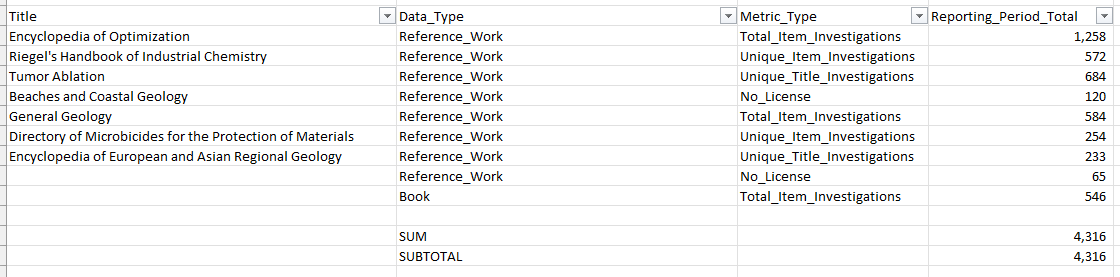
You use =SUM() to total up your data. Then you apply a filter. But… the total doesn’t change. Why? Because SUM() includes everything — even rows you hid from your guilt.
At first glance, both SUM and SUBTOTAL show the same result — the total from the ‘Reporting_Period_Total’ row.
Enter: Copilot. (See: This is how AI improves your puny human existence and makes you a more worthwhile version of yourself.)
Copilot said:
“Encik… if you want your totals to reflect only visible, filtered data — use SUBTOTAL().”
Boom. Enlightenment. SUBTOTAL is basically SUM’s smarter sibling. It knows when to recalculate based on what you actually want to see — the visible rows.
Apply a filter, and you’ll see the difference — SUM counts everything, even the hidden stuff. SUBTOTAL? It plays fair and totals only what’s visible.
Example: Let’s say you’re tracking sales in column B (B2 to B100):
=SUBTOTAL(109, B2:B100)
And yes… what is this mystical 109? It’s a code — an operation indicator. In this case, 109 = SUM only visible rows. It’s like function within a function — Excel’s version of Inception.
Here are more codes in the SUBTOTAL family:
101 → Average
102 → Count
104 → MAX
105 → MIN
So next time you’re slicing data like Amara punches psychos in Borderlands 3 — don’t just SUM(). SUBTOTAL() like a boss.
Milo in one hand. Filtered data in the other. We move.
Tiada sapa yg kasi tahu bahawasanya hidup ni macam Video Game. Life is just like video game, with some catch la…
Except the boss fights are bills, your health bar is sleep, and your main quest is explaining to your kids why Internet, Roblox, MineCraft are not basic human right.
I used to think life would be like Mario. You run, you jump, you collect coins. Senangkan? Loncat situ, loncat sini, makan Cendawan (bukan cendawan yg tu ek!!!), selamatkan Tuan Puteri.. yadda yadda yadda.
Turns out it’s more like Doom. Takde tutorial. Pause button pon untuk tgk Map. Bayar bills, buang sampah, vacuum rumah and the bumbung bocor bila hujan.
Then I read it:
Life is difficult. This is a great truth, one of the greatest truths. It is a great truth because once we truly see this truth, we transcend it. Once we truly know that life is difficult-once we truly understand and accept it-then life is no longer difficult. Because once it is accepted, the fact that life is difficult no longer matters.
From The Road Less Traveled.
Not from a ustaz or HR townhall. Just a book; but it hit like a final boss cutscene.
Here’s the thing:
If life was a game, and we were born in Malaysia, we’re not playing on Nightmare.
We’re on Hurt Me Plenty. Not the worst. Still painful. Berpoluh jugakla. With occasional MyKad discounts PetroSains (with additional discount being in PETRONAS guild) and the My50 RapidKL pass to soften the blow.
Take my recent side quests:
A gearbox overhaul that nearly gave me an out-of-body experience.
A roof leak that turns into ASMR every time it rains.
Three amazing kids: 15, 14, and 9; each with their own patch updates, emotional DLCs, and snack requirements.
A librarian wife at UPM; brilliant, compassionate, and also a pro at calling me out when I pretend to rest but scroll TikTok instead. (Nak main game kena setelkan kerja rumah dahulu)
Managing their expectations is like managing a 5-star hotel… are always hungry, emotionally expressive, and somehow allergic to chores.
That’s when Stoicism became my survival tool.
Ancient Roman advice for modern dad problems.
When the kid spills Milo on the floor: “The obstacle is the way.”
When meetings stack up like unpaid parking tickets: “Control what you can.”
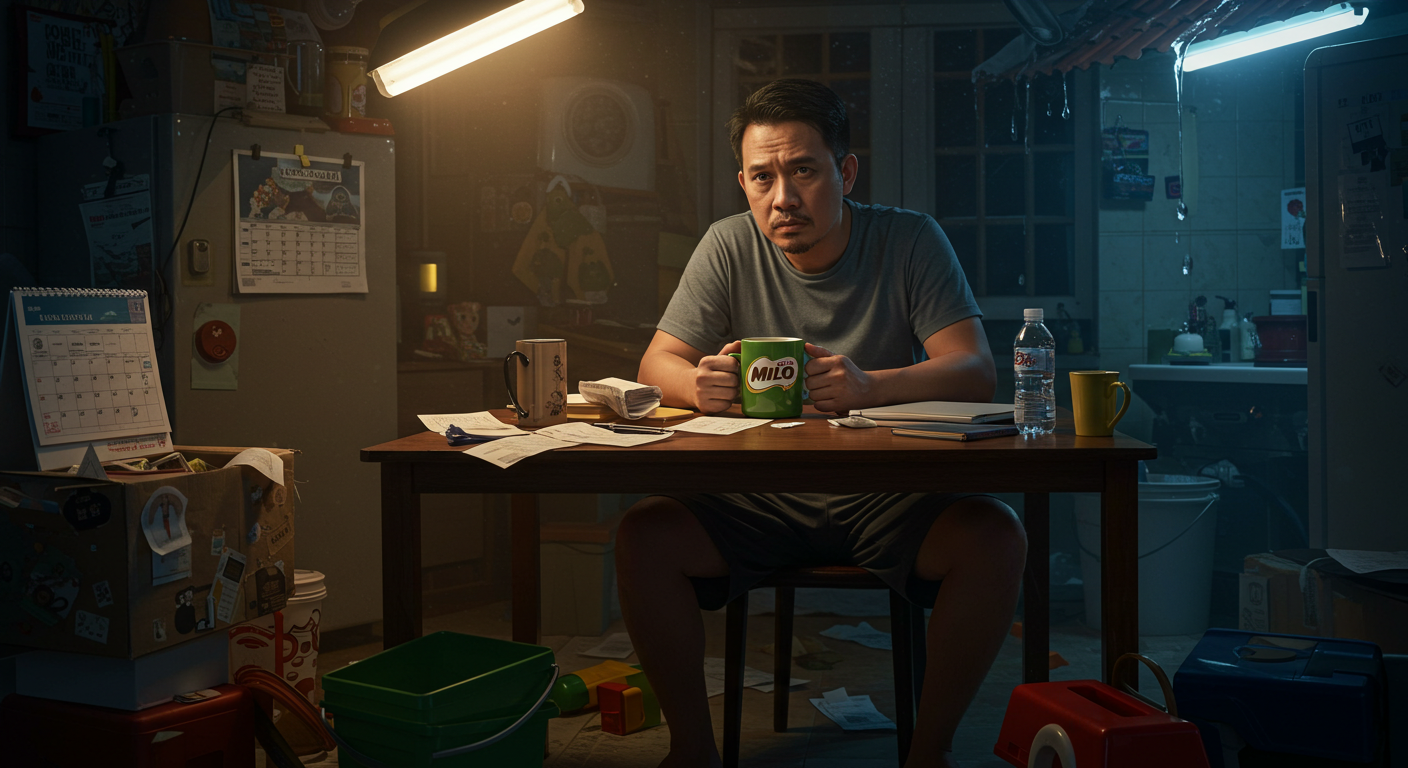
When the leak starts mid-night while everyone’s asleep: “Memento mori (refer note sana bawah)… and grab the mop.”
I’m not perfect.
But I’ve stopped asking for life to be easy.
Now I just ask for good sambal, enough data, and a break from surprise expenses.
Because life isn’t a game.
But if it was,
I’m still playing.
Still showing up.
Still the tank, healer, and main quest-giver for this small unit I call family.
Life is difficult. But not impossible.
Especially when you’ve got:
Grace, Grit and Kopi Susu CBTL… yeay and off course, Milo.
And maybe a spare pail for the roof.
A Note on “Memento Mori”
It’s Latin, and it means: “Remember that you will die.”
Sounds gloomy, but it’s not. It’s a reminder to live meaningfully.
To not waste time on trivial things.
To forgive faster.
To appreciate your people.
And to drink your Milo like it’s your last cup — with full focus and no regret.
Some people had coffee to start their morning. I had an imaginary letter telling me I no longer had a job.
Best part? It was all part of the plan.
That was how our session with Dr Jefri Irwan started yesterday. No warm up, no slides with fancy graphs. Just a straight dive into a very real situation.
It was not your usual session on how to stay calm. This one made us think deeply and reflect honestly.
At one point, Dr Jefri asked us to do a short exercise. We had to imagine receiving that dreaded letter, and then write down a few things:
Who to call and share – the people you would reach out to for emotional support
List the feelings – the emotions you would feel and whether you are willing to name them
Nak jumpa siapa for What’s Next – who you would talk to about your next step
Apa yang aku akan hilang atau berubah – what you might lose or what could change in your life
What will you get – the new opportunities or unexpected gains that might come your way
The whole exercise made something abstract feel real. It was a reminder of how differently our brains work depending on the situation.
When things are calm, we use the part of our brain that helps us plan, think clearly and make decisions. But in moments of fear or stress, that goes out the window. Our emotional brain takes over, and suddenly it is not about thinking anymore. It is about reacting.
So what can we do? Train the mind while it is calm. Build clarity before things get messy. Because when uncertainty hits, we fall back on what we have prepared.
And just to balance the heaviness, Dr Jefri also shared The Secret of Success:
Sabar
Tawakal
Kabel
Yes, kabel. Because sometimes success also needs strong WiFi… or someone who knows someone.
Good session. Deep takeaway. And a gentle nudge to stay ready, even when everything feels steady.
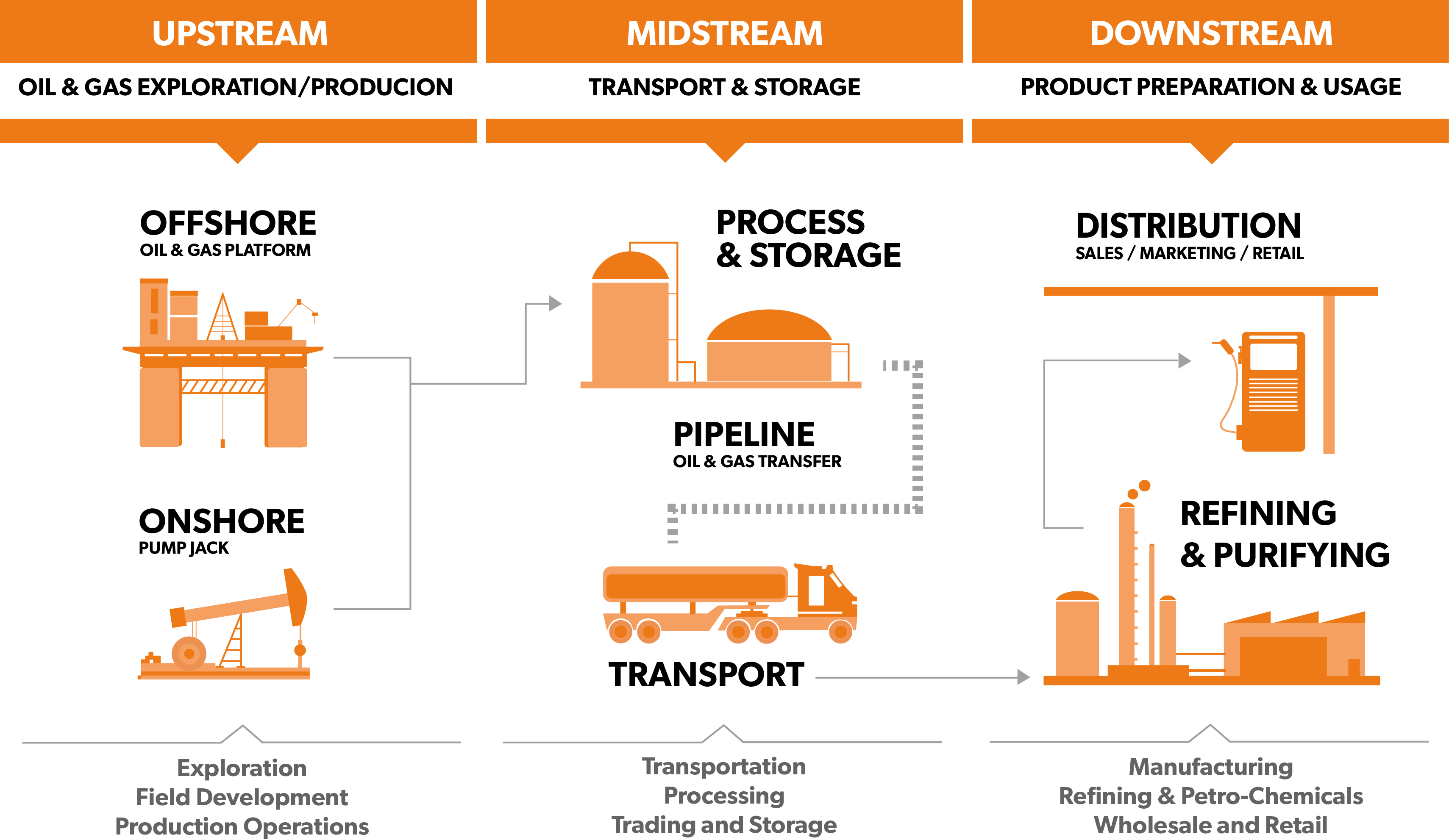
Hai adik-adik! Pernah tak dengar tentang minyak dan gas? Dalam industri ini, ada tiga bahagian utama, iaitu upstream, midstream, dan downstream.
Jom kita belajar apa maksudnya!
Apa itu Upstream (Huluan)?
“Upstream” ialah peringkat awal dalam industri minyak dan gas. Ia melibatkan:
Cari Minyak dan Gas – Orang minyak mencari kawasan di bawah tanah atau dasar laut yang mungkin ada minyak dan gas.
Gali dan Kaji – Mereka akan menggali untuk melihat sama ada minyak dan gas benar-benar ada di situ.
Pam ke Permukaan – Minyak dan gas yang dijumpai akan dibawa keluar ke permukaan supaya boleh digunakan.
Bahagian Lain Industri Minyak dan Gas
Selain upstream (huluan), ada dua lagi bahagian yang juga penting:
Midstream (Pertengahan) – Bahagian ini menguruskan penghantaran minyak dan gas dari tempat ia dijumpai ke tempat pemprosesan.
Downstream (Hiliran) – Di sini minyak dan gas diproses menjadi produk yang kita gunakan setiap hari, seperti petrol untuk kereta, gas memasak, dan pelbagai bahan lain.
Ada syarikat besar seperti PETRONAS yang terlibat dalam semua bahagian ini – dari upstream (huluan) ke midstream (pertengahan) dan downstream (hiliran).
Jadi, sekarang adik-adik tahu, upstream adalah peringkat pertama yang sangat penting. Midstream pula memastikan minyak dan gas dapat dihantar dengan selamat, dan downstream memastikan produk tersebut sampai kepada kita untuk digunakan dalam kehidupan seharian. Tanpa ketiga-tiga bahagian ini, banyak aktiviti harian kita akan terjejas.